Shanghai Zhongda Cancer Hospital上海中大肿瘤医院
Lung Cancer Treatment肺癌治疗
Knowing the types, stage, risk factors, symptoms and treatment choices can help you seek care in time and take part in decisions. Early lung cancer may cause no obvious symptoms. Treatment is planned for each person.了解肺癌的类型、分期、危险因素、症状及治疗选择,有助于及时就医并参与诊疗决策。肺癌早期可能没有明显症状,治疗需根据个人病情制定。

Patient information患者信息
From the patient education guide来自患者教育手册
The sections follow the brochure: what the cancer is, how stage is described, risk factors, changes to notice, and treatment choices.以下各节按手册顺序介绍:什么是这种癌症、分期如何描述、危险因素、需要留意的变化,以及治疗选择。
TNM stage, plus limited or extensive stageTNM分期,以及局限期或广泛期
Surgery, local treatment and systemic therapy手术、局部治疗和全身治疗
What lung cancer is什么是肺癌
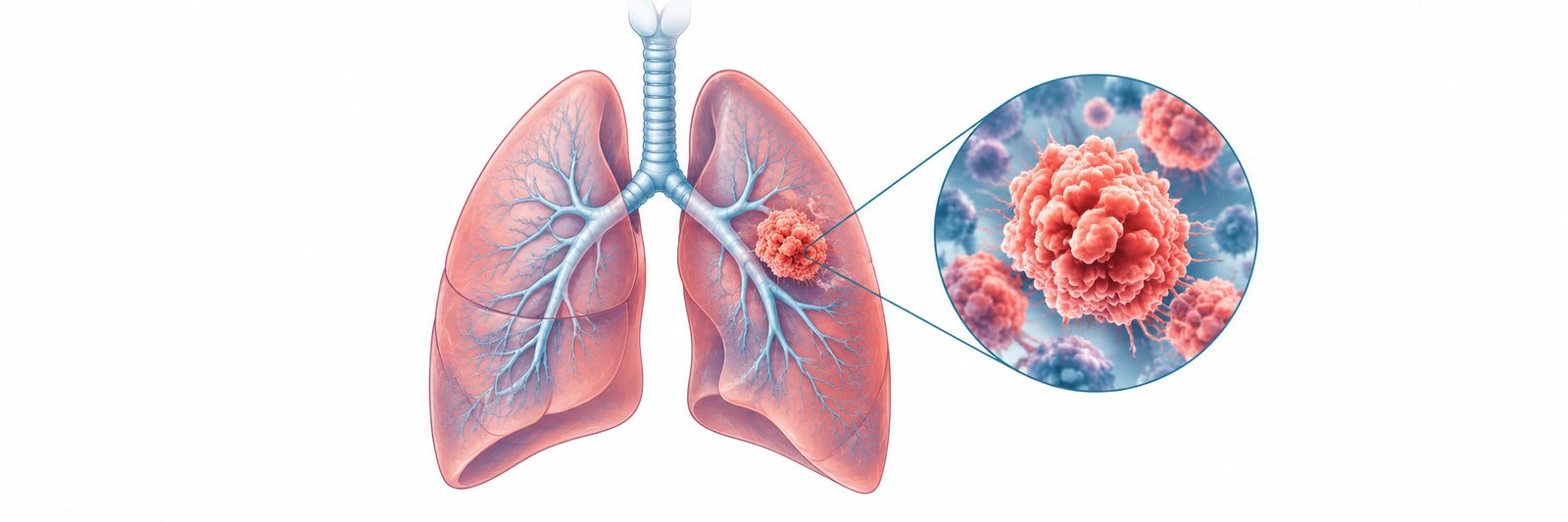
Lung cancer is a malignant tumor that starts in the lung. Abnormal cells keep growing and can form a mass, invade nearby tissue, or spread through lymph or blood to other parts of the body.肺癌是起源于肺部的恶性肿瘤。异常细胞不断增殖,可形成肿块、侵犯周围组织,也可能经淋巴或血液转移至其他部位。
A lung nodule is not the same as lung cancer. When imaging shows an abnormality, doctors look at earlier scans, risk factors and, when needed, pathology before deciding what it is.肺结节不等于肺癌。影像检查发现异常后,医生会结合既往影像、风险因素及必要的病理检查进一步判断。
Types of lung cancer肺癌的类型
Non-small cell lung cancer is the most common type. It includes adenocarcinoma, squamous cell carcinoma and less common subtypes. Their biology and treatment options differ.非小细胞肺癌是最常见的类型,包括腺癌、鳞癌及其他较少见亚型。不同亚型的生物学特点和可选治疗有所不同。
Small cell lung cancer usually grows faster and spreads earlier. Its treatment strategy is different from non-small cell lung cancer. Pathology is required to confirm the type. A simple drawing of the two cell types cannot be used to decide the pathology.小细胞肺癌通常生长较快,较早发生转移。它与非小细胞肺癌的治疗策略不同,具体类型需由病理检查确定。简单的细胞示意图不能用来判断病理类型。
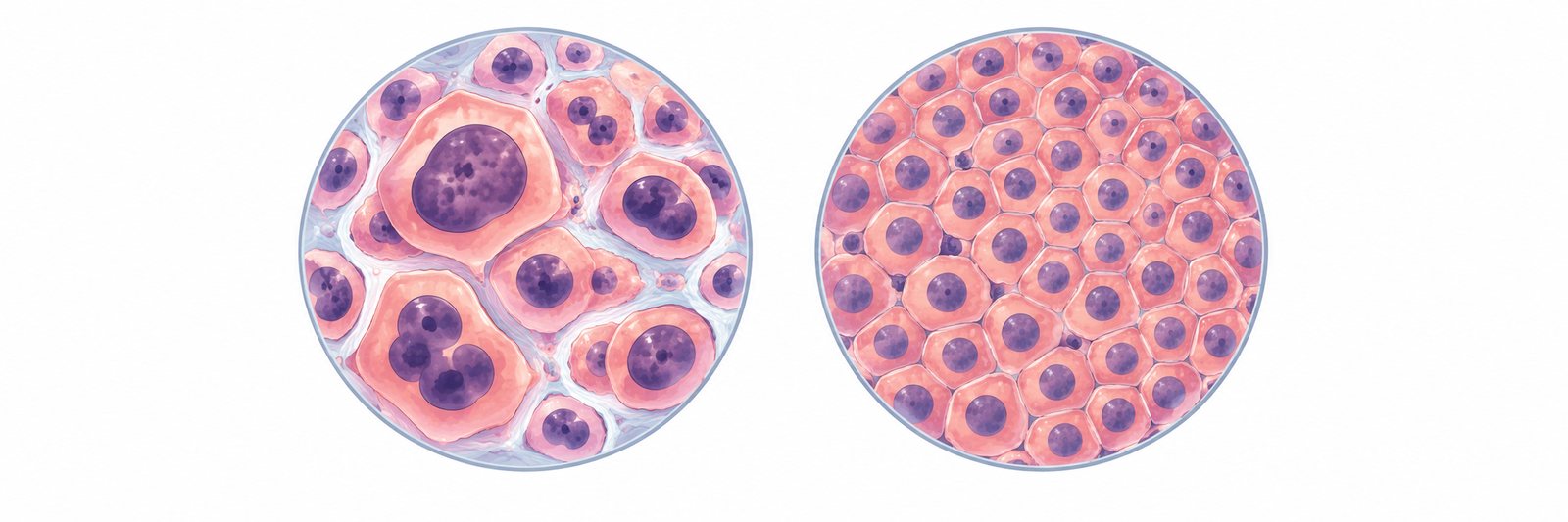
- Non-small cell lung cancer非小细胞肺癌
- Small cell lung cancer小细胞肺癌
How lung cancer is staged肺癌的分期
Stage describes how far the cancer has spread. Non-small cell lung cancer commonly uses the TNM system: the size and local invasion of the primary tumor (T), regional lymph nodes (N), and distant metastasis (M).分期描述肿瘤在体内的范围。非小细胞肺癌常用TNM系统,综合原发肿瘤的大小和侵犯范围(T)、区域淋巴结受累情况(N)及有无远处转移(M)确定分期。
Stage I is usually limited to the lung, without regional lymph-node involvement or distant spread. Stage II may mean a larger tumor, some local invasion, or involvement of some nearby lymph nodes. Stage III is locally or regionally advanced, with more extensive local invasion or regional lymph nodes, and no distant metastasis. Stage IV means the cancer has spread, for example to the other lung, the pleura, or distant organs such as the brain, bone or liver.Ⅰ期通常局限于肺内,未累及区域淋巴结,也无远处转移。Ⅱ期可能表现为肿瘤更大、一定程度的局部侵犯,或累及部分附近淋巴结。Ⅲ期属于局部或区域进展,可有更广泛的局部侵犯或区域淋巴结受累,尚无远处转移。Ⅳ期出现转移,例如对侧肺病灶、胸膜播散,或脑、骨、肝等远处器官转移。
Small cell lung cancer is often described as limited stage or extensive stage. TNM staging can also be used. These descriptions are for understanding only. Stage cannot be decided from symptoms or a single image.小细胞肺癌临床常分为局限期和广泛期,也可采用TNM分期。上述介绍仅用于理解,不能仅凭症状或单张影像自行判定分期。
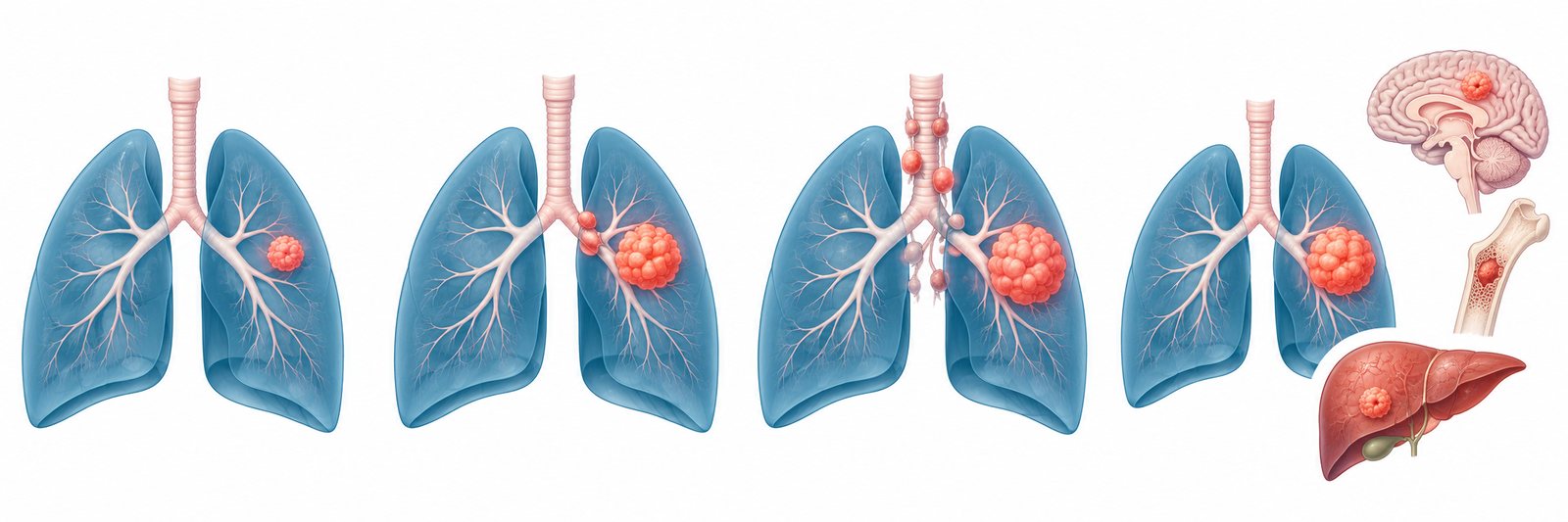
- Stage IⅠ期
- Stage IIⅡ期
- Stage IIIⅢ期
- Stage IVⅣ期
- Brain, bone and liver脑、骨、肝
Risk factors肺癌的危险因素
Smoking is an important risk factor, and secondhand smoke also increases risk. Other related factors include indoor and outdoor air pollution, radon, occupational carcinogens such as asbestos, inherited susceptibility, and some chronic lung diseases. People who do not smoke can still develop lung cancer.吸烟是肺癌的重要危险因素,二手烟也会增加风险。其他相关因素包括室内外空气污染、氡暴露、石棉等职业致癌物、遗传易感性及部分慢性肺病。不吸烟的人也可能患肺癌。
Stopping smoking, avoiding secondhand smoke, reducing environmental exposure and using workplace protection can lower risk. People with a long smoking history or other high-risk factors can ask a doctor whether low-dose chest CT screening and follow-up are suitable.戒烟并远离二手烟、改善环境暴露及做好职业防护,有助于降低风险。有长期吸烟史等高风险因素的人群,可咨询医生是否适合进行低剂量胸部CT筛查及复查。
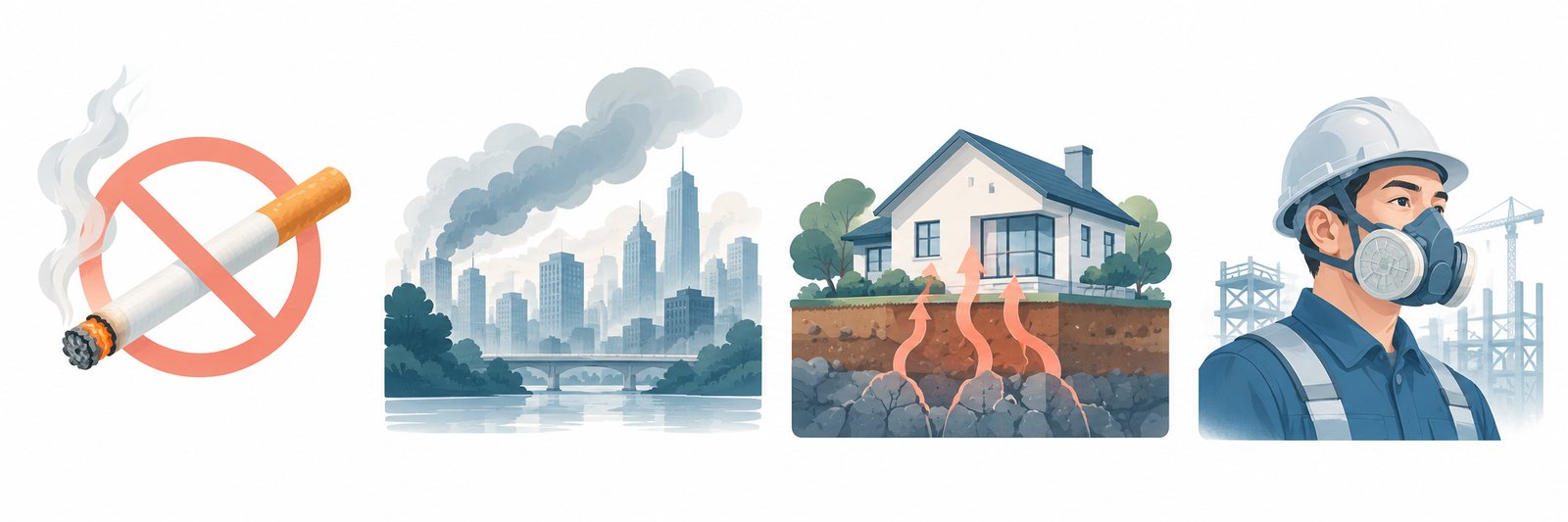
- Tobacco烟草
- Air pollution空气污染
- Radon氡
- Workplace exposure职业暴露
Symptoms to notice肺癌的症状
Changes to discuss with a doctor include a cough that continues or worsens, blood in the sputum or coughing up blood, chest pain, shortness of breath, repeated lung infections, and unexplained weight loss or fatigue. Early lung cancer may have no obvious symptoms. These problems are not always lung cancer, but they should be checked.需要关注的表现包括持续或加重的咳嗽、痰中带血或咯血、胸痛、气短、反复肺部感染,以及不明原因的体重下降、乏力。肺癌早期可能没有明显症状;出现上述表现也不一定是肺癌,应及时就医查明原因。
Heavy coughing of blood or marked difficulty breathing needs emergency care. Screening is for eligible people who do not have symptoms. Once symptoms appear, the evaluation should look for the cause.如出现大量咯血或明显呼吸困难,应立即急诊。筛查面向符合条件的无症状高风险人群;出现症状后,应接受针对病因的诊断评估。
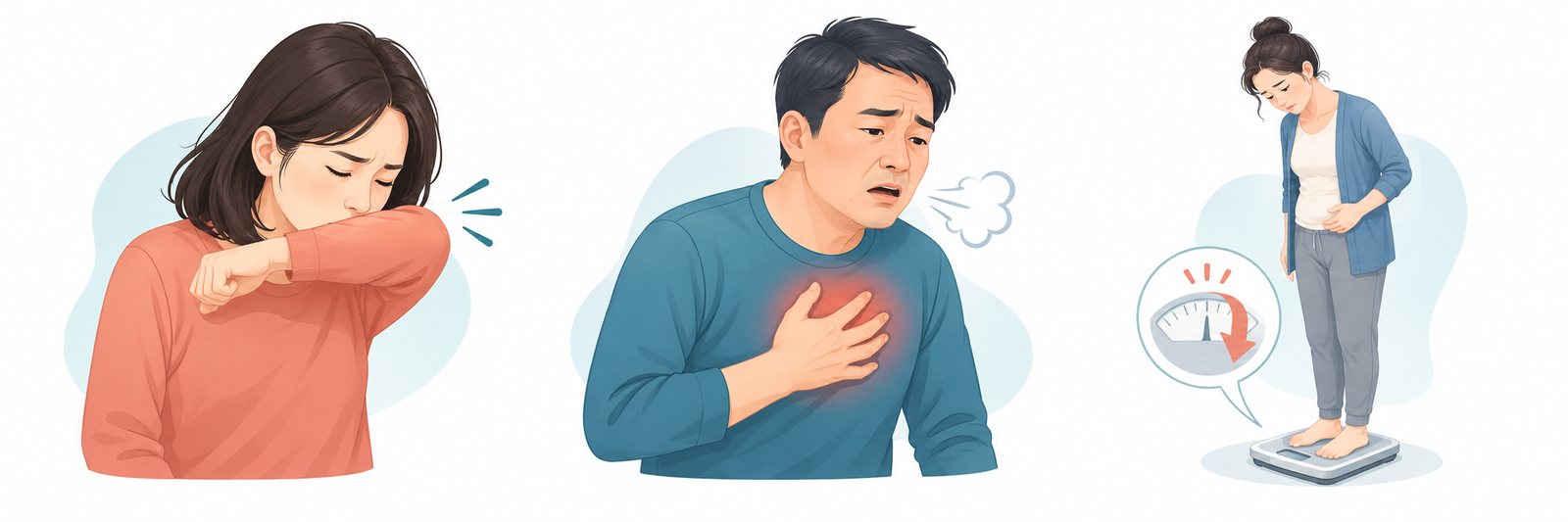
- Cough咳嗽
- Chest discomfort胸部不适
- Weight loss体重下降
Treatment choices可以使用的治疗方式
Treatment depends on the type of lung cancer, stage, molecular testing, heart and lung function, and personal wishes. The list below is an order for reading. It is not a ranking of benefit and not the order in which treatment is given. Every treatment can have risks. Leaving a risk unlisted does not mean there is no risk. Benefit varies from person to person.治疗需结合肺癌类型、分期、分子检测、心肺功能和个人意愿制定。以下按介绍顺序排列,不代表疗效排名或临床治疗顺序。各种治疗都可能存在风险,未逐项列出风险不表示没有风险;实际获益因人而异。
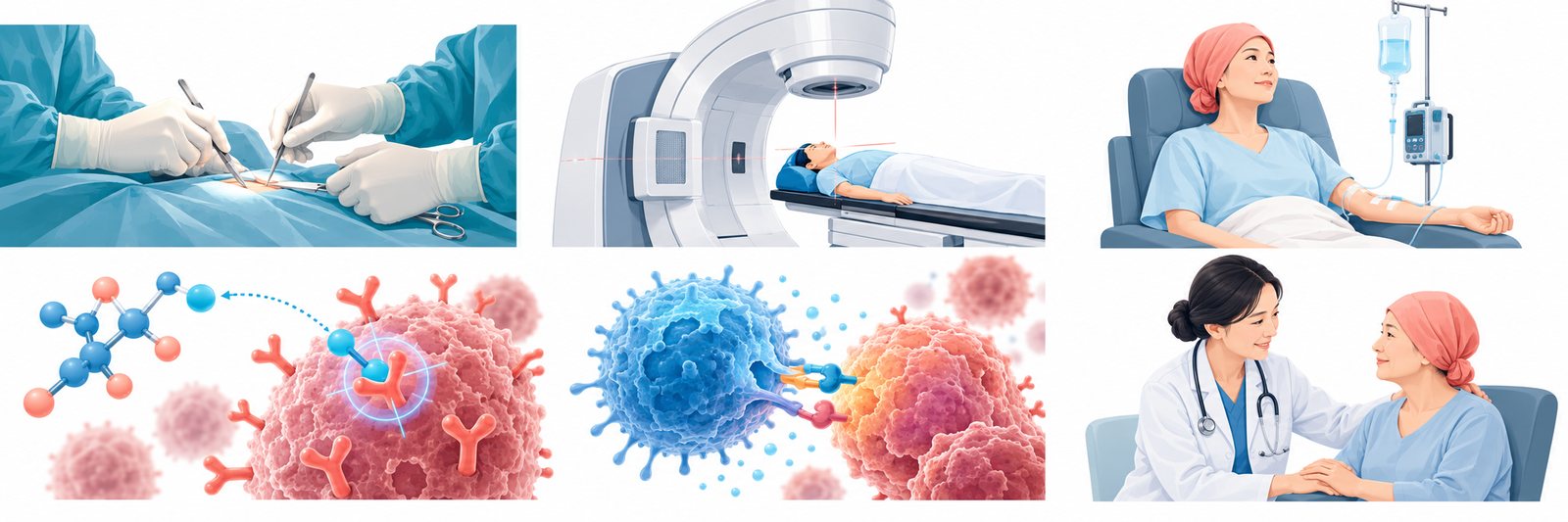
- Surgery手术
- Radiotherapy放射治疗
- Medicines药物治疗
- Targeted therapy靶向治疗
- Immunotherapy免疫治疗
- Supportive care支持照护
1.Surgery手术治疗
Surgery removes the tumor and the lung tissue that needs to be removed, and assesses the relevant lymph nodes. It is mainly for some people with operable non-small cell lung cancer.切除肿瘤及必要的肺组织,并评估相关淋巴结,主要适用于部分可手术的非小细胞肺癌患者。For suitable patients with early disease, it can offer treatment with cure as the goal. The removed tissue also helps confirm the pathology type and stage and can guide later treatment.对于适合手术的早期患者,可提供以治愈为目标的治疗机会;切除标本还可帮助明确病理类型和分期,指导后续治疗。Possible problems include pain, bleeding, infection and a prolonged air leak. Removing lung tissue can affect lung function and needs time for recovery. Not everyone can tolerate an operation. Cancer can still return, and some people also need other treatment.可能出现疼痛、出血、感染、持续漏气等并发症;切除肺组织可能影响肺功能,需要恢复时间。并非所有患者都能耐受手术,术后仍可能复发,部分患者还需其他治疗。2.Minimally invasive interventional techniques微创介入技术
This name covers several techniques. In the lung, common methods include image-guided microwave, radiofrequency or cryoablation. Each has its own range of use. An advantage of one technique should not be treated as an advantage of every interventional treatment.这是多类技术的统称,肺部常见方式包括影像引导下的微波、射频或冷冻消融等。不同技术适用范围不同,不能将某一种技术的优势推广到全部介入治疗。Percutaneous ablation, for example, usually reaches the lesion through a needle without opening the chest, so less normal lung is removed. In suitable patients, recovery is often shorter, and repeat treatment can be considered. It can be a local option for some small, limited lesions when surgery is not suitable.以经皮消融为例,通常通过穿刺针到达病灶,无需开胸,可减少对正常肺组织的切除;在合适患者中,恢复时间通常较短,并可按病情评估重复治疗。可为部分不适合手术的小型局限病灶提供局部治疗选择。The decision depends on tumor size, location, number and heart-lung function. These techniques are not automatically better than surgery or radiotherapy. Local treatment also does not replace the systemic treatment that metastatic lung cancer may need.需根据肿瘤大小、位置、数量和心肺功能评估;不能据此认为优于手术或放疗,也不能用局部治疗替代转移性肺癌所需的系统治疗。3.Iodine-125 seed implantation碘-125粒子植入术
Under image guidance and a dose plan, radioactive iodine-125 seeds are placed in or around the tumor. This is local brachytherapy. It is described separately here, although it can also be classified as interventional treatment.在影像引导及剂量计划下,将放射性碘-125粒子置于肿瘤内或周围,属于局部近距离放射治疗。此处单独介绍,技术分类上也可属于介入治疗。The seeds release low-dose-rate radiation continuously near the lesion, giving a more concentrated local dose. A careful plan helps limit the dose to surrounding normal tissue. For carefully selected patients who cannot have surgery, or who have recurrent or residual disease, it may be an option for local control.粒子可在病灶附近持续释放低剂量率射线,形成较集中的局部照射;通过规范计划有助于限制周围正常组织的受照剂量。对经严格筛选的部分不能手术、复发或残留病灶患者,可作为局部控制的备选方式。An experienced team needs to assess imaging, verify the dose, arrange follow-up and follow radiation-protection rules. It is not the routine first choice for every person with lung cancer. Its evidence and range of use are not the same as standard surgery, external-beam radiotherapy or systemic therapy.需由具备经验的团队评估,进行影像定位、剂量验证和随访,并遵守放射防护要求。它不是所有肺癌患者的常规首选,证据和适用范围不能等同于标准手术、外照射或系统治疗。4.Chemotherapy化学治疗
These medicines can act on disease throughout the body. They may be used to shrink a tumor before surgery, lower the chance of recurrence after surgery, or control advanced disease. Chemotherapy is also an important part of treatment for small cell lung cancer.药物可作用于全身病灶,用于术前缩小肿瘤、术后降低复发风险,或控制进展期疾病;也是小细胞肺癌的重要治疗组成。It can cause nausea, vomiting, fatigue, hair loss and bone-marrow suppression, which raises the risk of infection or bleeding. Some drugs affect the nerves, kidneys or hearing. Effects differ by regimen and need regular checks and adjustment.可能引起恶心、呕吐、乏力、脱发及骨髓抑制,增加感染或出血风险;部分药物可影响神经、肾脏或听力。疗效及副作用因方案而异,需要定期检查和调整。5.Targeted therapy靶向治疗
These medicines are aimed at specific molecular changes. Some patients with a matching target can achieve useful tumor control. Some of the medicines are taken by mouth.针对特定分子改变,部分具有相应靶点的患者可获得较好的肿瘤控制;部分药物可以口服,使用相对方便。Testing is usually needed to confirm the target. The treatment does not work for everyone, and resistance can develop. Different drugs may cause rash, diarrhea or abnormal liver tests. A small number of people have serious lung or heart effects.通常需检测确认适用靶点,并非所有患者都有效,治疗后可能出现耐药。不同药物可能引起皮疹、腹泻、肝功能异常等,少数可发生严重肺部或心脏不良反应。6.Immunotherapy免疫治疗
Immunotherapy helps the immune system recognize and attack the tumor. Suitable patients may receive it alone or with chemotherapy or other treatment. Some people have longer-lasting disease control.帮助免疫系统识别和攻击肿瘤,适合的患者可单独使用或联合化疗等治疗;部分患者可获得较持久的疾病控制。Not everyone benefits. It can cause immune-related pneumonitis, colitis, hepatitis, or thyroid and other endocrine problems. A few reactions are severe and can appear after the medicine is stopped. New cough, wheezing or diarrhea should be reported promptly.并非所有患者都能获益。可能引起免疫相关肺炎、肠炎、肝炎、甲状腺等内分泌异常,少数反应严重,且可能在停药后出现。需及时报告新发咳喘、腹泻等异常。7.Supportive and palliative care支持与姑息治疗
Pain and breathlessness management, nutrition and psychological support can improve quality of life. This care can be given at the same time as cancer treatment. It does not mean that treatment has been stopped.通过疼痛与气促管理、营养和心理支持改善生活质量,可与抗肿瘤治疗同时开展,并不等于放弃治疗。Its main aim is to relieve symptoms. It does not usually remove the tumor by itself. Medicines and procedures also have side effects. Some pain medicines, for example, can cause constipation, nausea or drowsiness, and are adjusted according to effect and tolerance.主要目标是缓解症状,通常不能单独清除肿瘤。具体药物或操作也有副作用,例如部分止痛药可引起便秘、恶心或嗜睡,需要按效果和耐受性调整。
Questions you can ask可以询问的问题
- What does the diagnosis and stage mean?诊断和分期是什么意思?
- Which tests or records are still needed?还需要哪些检查或资料?
- What options could be considered and why?可以考虑哪些选择,原因是什么?
- What risks, side effects or alternatives matter?哪些风险、副作用或替代方案需要了解?
Educational information only. A qualified clinician should review your personal medical records before care decisions are made.以上为科普信息。做出诊疗决定前,应由合格的临床医生查看您的病历。
Related information相关信息
Explore treatment technologies了解治疗技术
Technology pages describe topics to discuss with a clinician; they do not determine which care is appropriate.技术页面只说明可以和医生讨论的话题,不能决定哪种治疗适合您。
 Technology技术Interventional TherapyInterventional TherapyImage-guided procedures that may be discussed for selected tumors after specialist assessment.Image-guided procedures that may be discussed for selected tumors after specialist assessment.View details查看详情 Technology技术CryotherapyCryotherapyA minimally invasive technique that uses controlled cooling for selected clinical situations.A minimally invasive technique that uses controlled cooling for selected clinical situations.View details查看详情
 Technology技术Combined KnifeCombined KnifeA focused interventional approach discussed within a wider multidisciplinary care plan.A focused interventional approach discussed within a wider multidisciplinary care plan.View details查看详情
Patient stories患者故事
Related experiences相关经历
Examples on this demonstration site are illustrative content, not verified patient testimonials.本站示例仅用于说明,不是经核实的患者证词。