Shanghai Zhongda Cancer Hospital上海中大肿瘤医院
Breast Cancer Treatment乳腺癌治疗
A new breast lump, or a change in the nipple or skin, is worth a breast-specialist examination even when it does not hurt. This guide explains how to read a pathology report, how stage is described, and how treatment choices are considered.发现新的乳房肿块或乳头、皮肤变化,即使没有疼痛,也值得到乳腺专科检查。本手册介绍如何理解病理报告、分期和治疗选择。

Patient information患者信息
From the patient education guide来自患者教育手册
The sections follow the brochure: what the cancer is, how stage is described, risk factors, changes to notice, and treatment choices.以下各节按手册顺序介绍:什么是这种癌症、分期如何描述、危险因素、需要留意的变化,以及治疗选择。
ER, PR, HER2 and TNM stageER、PR、HER2和TNM分期
Surgery, radiation, medicines and selected local techniques手术、放疗、药物和部分局部技术
What breast cancer is什么是乳腺癌
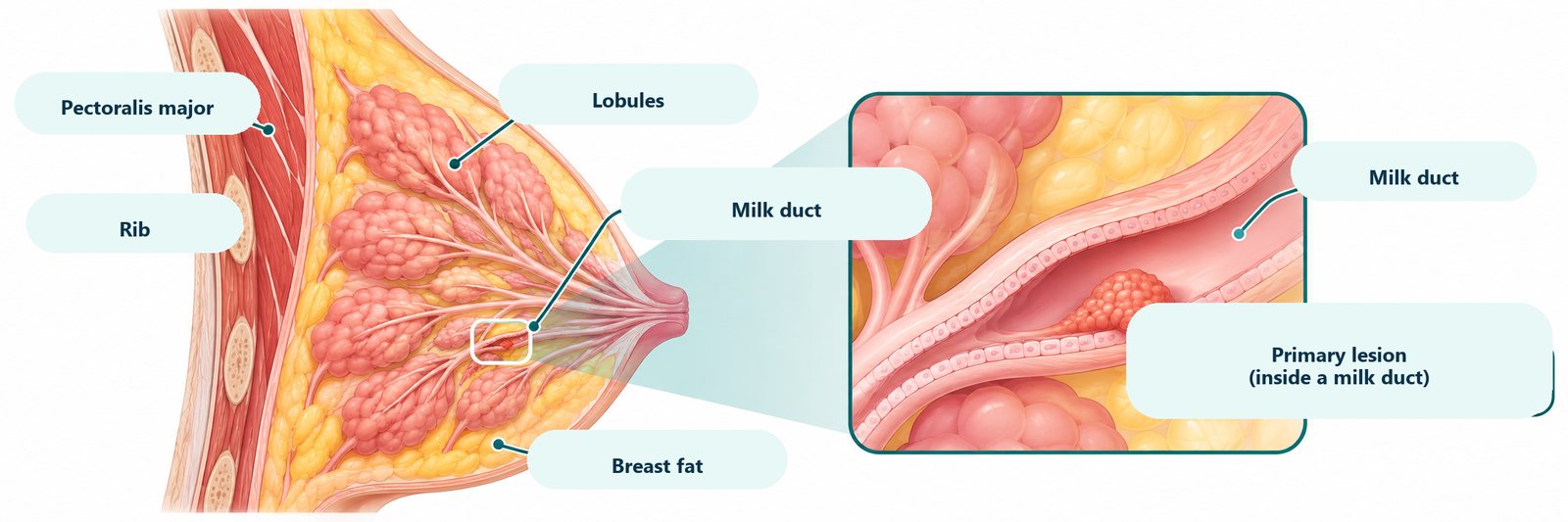
Lobules in the breast make milk, and ducts carry it to the nipple. Most breast cancers start in the epithelial cells of these structures. Doctors assess a suspicious area with examination, mammography and ultrasound, and take a needle sample for pathology to determine what it is.乳房内的小叶分泌乳汁,导管将乳汁输送至乳头。多数乳腺癌起源于这些结构的上皮细胞。医生综合体检、乳腺X线摄影和超声评估可疑病灶,并通过穿刺取样做病理检查,明确性质。
Types of breast cancer乳腺癌的类型
In ductal carcinoma in situ, the abnormal cells stay inside a milk duct. In invasive breast cancer, the cancer cells have crossed the original tissue boundary into the surrounding breast. Invasive breast cancer includes invasive carcinoma of no special type and invasive lobular carcinoma, among others.导管原位癌的异常细胞局限于乳腺导管内。浸润性乳腺癌的癌细胞已越过原来的组织边界,进入周围乳腺组织。浸润性乳腺癌包括浸润性非特殊型癌、浸润性小叶癌等。
The pathology report also lists the estrogen receptor (ER), progesterone receptor (PR) and HER2. ER or PR positive disease can be assessed for endocrine therapy. HER2 positive disease can be assessed for anti-HER2 therapy. When all three are negative, the cancer is called triple-negative breast cancer.病理报告还会列出雌激素受体(ER)、孕激素受体(PR)和HER2。ER或PR阳性提示可评估内分泌治疗,HER2阳性提示可评估抗HER2治疗。三项均为阴性称为三阴性乳腺癌。
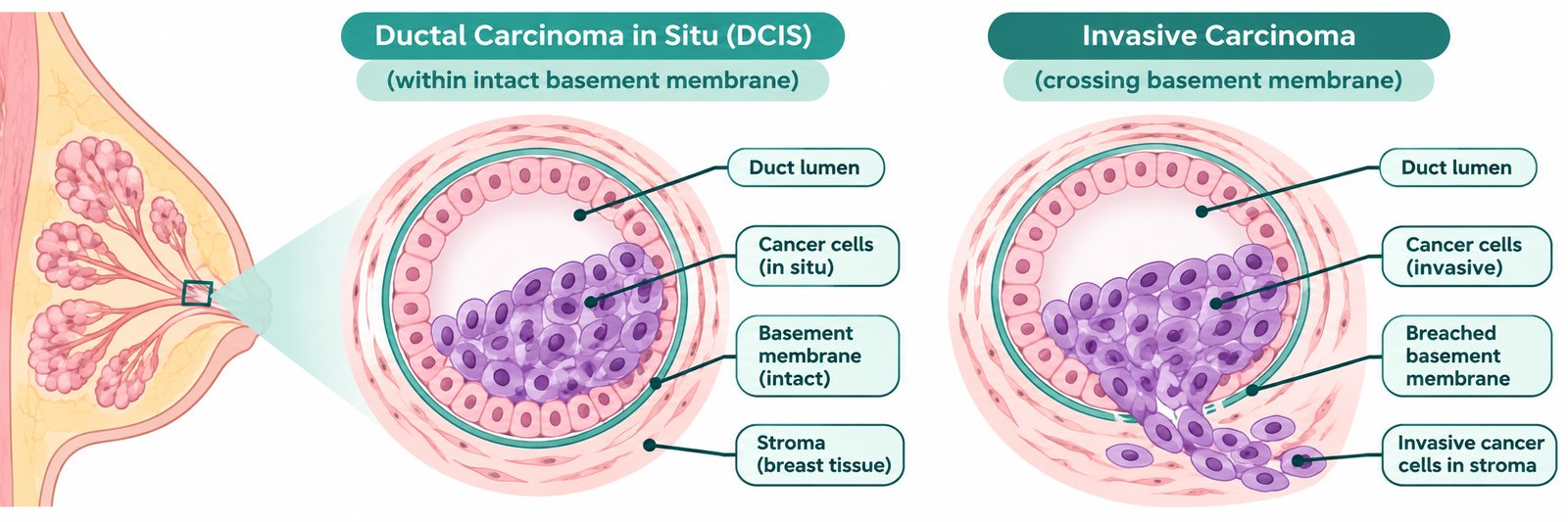
- Ductal carcinoma in situ导管原位癌
- Invasive carcinoma浸润性癌
- Basement membrane基底膜
How breast cancer is staged乳腺癌如何分期
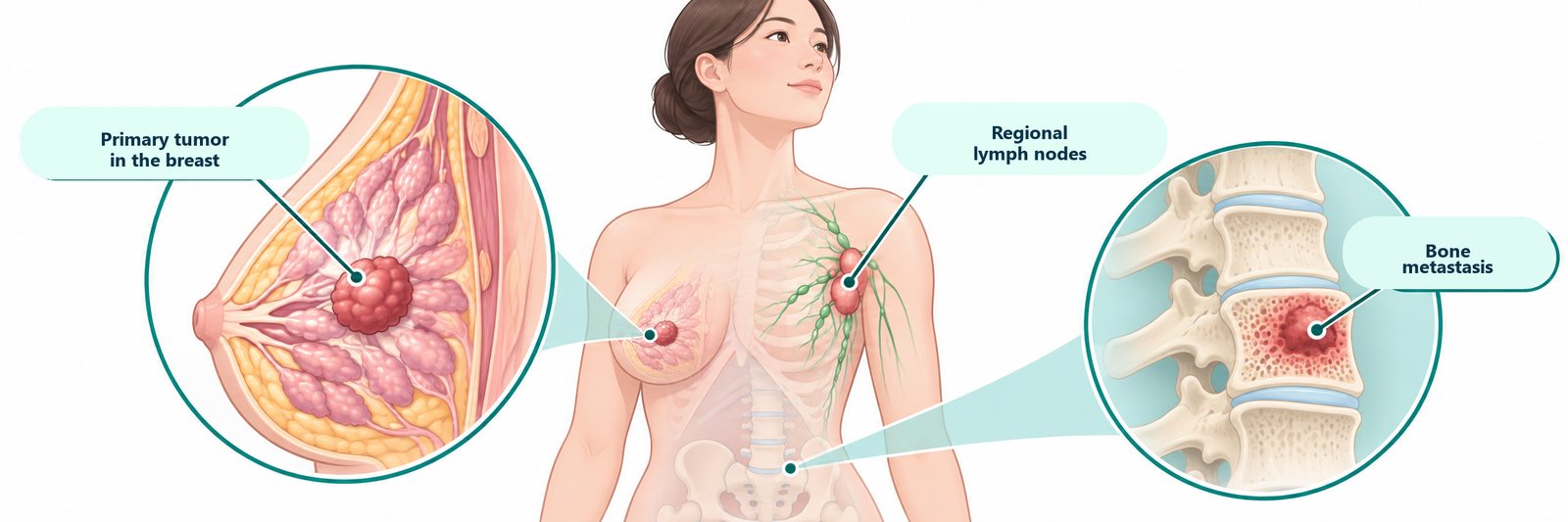
TNM describes three things: the extent of the primary tumor in the breast (T), regional lymph-node involvement (N), and distant metastasis (M). Prognostic stage also uses the tumor grade and the ER, PR and HER2 results. The outline below is a simplified description of anatomic extent.TNM描述三个方面:乳房原发肿瘤的范围(T)、区域淋巴结受累情况(N)和远处转移(M)。预后分期还结合肿瘤分级及ER、PR、HER2检测结果。下面按解剖范围作简化说明。
Stage 0 is represented by ductal carcinoma in situ. Stages I and II are mostly disease inside the breast, sometimes with nearby lymph nodes. Stage III has wider local or regional involvement, for example the chest wall, the skin, or more regional lymph nodes. Stage IV has distant spread, for example to bone, liver or lung.0期以导管原位癌为代表。Ⅰ至Ⅱ期多为乳房内病灶,部分累及附近淋巴结。Ⅲ期局部或区域受累较广,例如侵犯胸壁、皮肤或累及更多区域淋巴结。Ⅳ期发生远处转移,例如转移到骨、肝或肺。
Factors that can raise risk哪些因素会增加风险
Older age, a close relative with breast or ovarian cancer, a disease-causing BRCA1 or BRCA2 variant, and radiotherapy to the chest at a young age are linked with higher risk. Alcohol, low physical activity and obesity after menopause are also linked with higher risk.年龄增长、近亲患乳腺癌或卵巢癌、携带BRCA1或BRCA2致病变异,以及年轻时胸部接受过放疗,均与较高风险有关。饮酒、缺乏体力活动和绝经后肥胖也与风险增加有关。
Tell the doctor the type of cancer and the age at diagnosis for relatives on both your father's and your mother's side. That information helps discuss screening and genetic counseling. Most people with breast cancer do not have a clear inherited family history.可向医生提供父系和母系亲属的患癌类型及确诊年龄,以便讨论筛查安排和遗传咨询。多数乳腺癌患者没有明确的遗传性家族史。

- Older age年龄增长
- Family history家族史
- Alcohol饮酒
- Low activity缺乏体力活动
Changes to notice需要关注哪些变化
Notice a new lump in the breast or armpit, a change in breast shape, skin dimpling or an orange-peel appearance, a nipple that has newly turned inward, and spontaneous discharge from one nipple, especially bloody discharge. Benign conditions can look similar. An examination is needed to tell them apart.留意新出现的乳房或腋下肿块、乳房形状改变、皮肤凹陷或橘皮样改变、乳头新近内陷,以及单侧乳头自发溢液,尤其是血性溢液。良性疾病也会引起类似表现,需要检查来区分。
When there are no symptoms, breast screening can be arranged according to age, personal risk and local recommendations. A new abnormality should still be checked even if a recent screen was normal. The doctor decides whether further imaging or a sample is needed.没有症状时,可按年龄、个人风险及当地建议安排乳腺筛查。即使近期筛查结果正常,新出现的异常也应就诊,由医生决定是否需要进一步影像检查或取样。
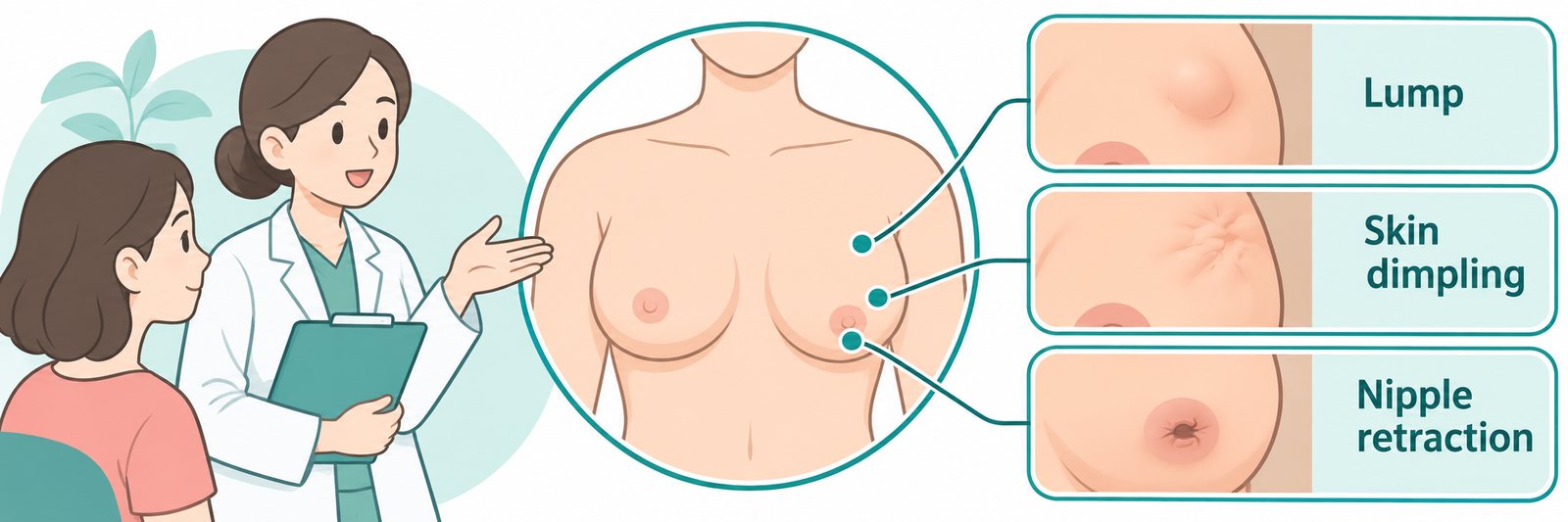
- Lump肿块
- Skin dimpling皮肤凹陷
- Nipple retraction乳头内陷
Treatment choices可以使用的治疗方式
The order of treatment depends on stage, pathology type, receptor status, previous treatment and personal wishes. Some people have surgery first. Others have drug treatment first to shrink the tumor. The numbers below are only for reference.治疗顺序取决于分期、病理类型、受体状态、既往治疗和个人意愿。部分患者先手术,另一些患者先接受药物治疗以缩小肿瘤。以下编号仅供查阅。
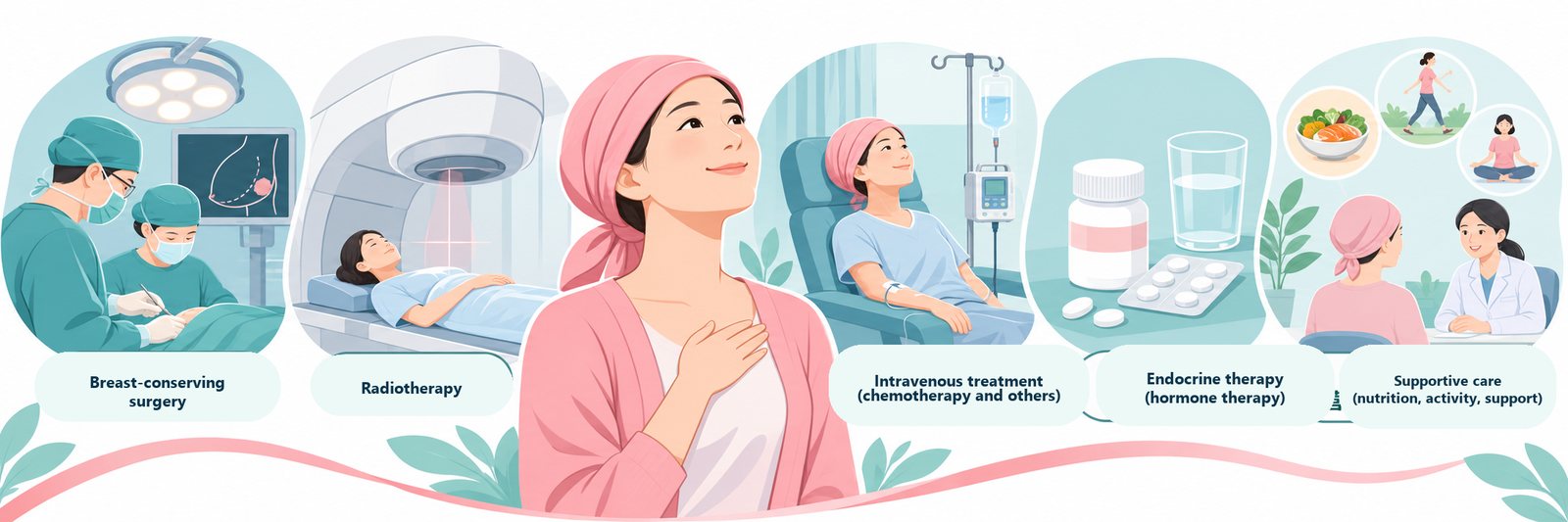
1.Surgery手术治疗
For people who are suitable for surgery, breast-conserving surgery or mastectomy can remove the disease in the breast. Eligible people with early disease who have breast-conserving surgery and radiotherapy can have long-term survival similar to mastectomy.对适合手术的患者,保乳手术或全乳切除可清除乳房病灶。符合条件的早期患者接受保乳手术并配合放疗,可获得与全乳切除相近的长期生存结果。Risks and limits include bleeding, infection, a change in shape and a change in local sensation. After axillary lymph-node surgery, some people develop lymphoedema of the arm or limited shoulder movement. If cancer cells remain at the edge after breast-conserving surgery, further excision is assessed.风险与不足包括出血、感染、外形改变和局部感觉变化。腋窝淋巴结手术后,部分患者出现上肢淋巴水肿或肩部活动受限。保乳术后若切缘有癌细胞,需评估再次切除。2.Minimally invasive techniques微创介入技术
Ultrasound-guided cryoablation is one example. A probe is placed in the lesion and cold is used to destroy tissue. Carefully selected patients can have local treatment through a small puncture and keep more breast tissue.以超声引导下冷冻消融为例,医生将探针送入病灶,通过低温破坏组织。经严格筛选的患者可在较小穿刺创口下接受局部治疗,保留较多乳房组织。The relevant studies are mainly in older patients with smaller, lower-risk, hormone-receptor-positive tumors. Before it is used, the extent of the lesion, the lymph nodes and the ability to follow the area with imaging need to be assessed, and the approach compared with standard surgery.相关研究主要针对年龄较大、肿瘤较小、低风险且激素受体阳性的部分患者。采用前需评估病灶范围、淋巴结及后续影像随访条件,并与标准手术方案比较。3.Iodine-125 seed implantation碘-125粒子植入术
Under image guidance and dose planning, radioactive seeds are implanted in a selected lesion and give continuous brachytherapy. In some small studies of unresectable locally recurrent breast cancer, disease in the implanted area was controlled.在影像引导和剂量规划下,将放射性粒子植入选定病灶,持续近距离照射。针对难以手术切除的局部区域复发乳腺癌,部分小型研究观察到植入区域的病灶得到控制。The available information comes mainly from small studies, and a long-term survival benefit is not established. The specialist team needs to assess the previous radiation dose, the distance from the lesion to the skin and chest wall, and the other treatment choices. This use is different from placing a seed to mark the position of a lesion before surgery.现有资料主要来自小样本研究,长期生存获益尚未确定。专科团队需评估既往照射剂量、病灶与皮肤和胸壁的距离,以及其他治疗选择。该用途区别于术前用粒子标记病灶位置。4.Radiotherapy放射治疗
Radiotherapy after breast-conserving surgery can lower the risk of local recurrence. Some people who have a mastectomy also need an assessment of radiation to the chest wall and regional lymph nodes. For painful bone metastases, local radiotherapy can help relieve pain.保乳术后放疗可降低局部复发风险。部分全乳切除患者也需评估胸壁及区域淋巴结照射。对疼痛性骨转移,局部放疗可帮助缓解疼痛。The treated skin can become red, painful or peel, and fatigue can occur. The plan should limit the dose to the heart and lungs so that late injury is reduced.照射区域可出现红斑、疼痛和皮肤脱屑,也会出现乏力。制定计划时需控制心脏和肺的受照剂量,以减少迟发损伤。5.Chemotherapy化学治疗
Chemotherapy before surgery can shrink the disease. Chemotherapy after surgery can lower the risk of recurrence for some people. When the cancer has spread to distant sites, chemotherapy can act on disease in more than one part of the body.术前化疗可缩小病灶,术后化疗可降低部分患者的复发风险。发生远处转移时,化疗可作用于身体多个部位的病灶。Common effects include nausea, hair loss, fatigue and a fall in blood counts. Some drugs affect heart function, peripheral nerves or fertility. People who may want a pregnancy should discuss fertility preservation before treatment.常见反应包括恶心、脱发、乏力及血细胞减少。部分药物影响心功能、周围神经或生育能力。有生育计划者宜在用药前讨论生育力保存。6.Endocrine therapy内分泌治疗
Endocrine therapy is for hormone-receptor-positive breast cancer. Tamoxifen, aromatase inhibitors and related medicines reduce the stimulation of cancer cells by hormones. Used after surgery, they can help lower the risk of recurrence. The choice of medicine depends on menopausal status.适用于激素受体阳性的乳腺癌。他莫昔芬、芳香化酶抑制剂等药物可减少激素对癌细胞的刺激,术后使用有助于降低复发风险。具体药物与绝经状态有关。Hot flushes and joint discomfort affect daily life for some people. Aromatase inhibitors can speed bone loss. Tamoxifen raises the risk of blood clots and endometrial changes. Follow-up priorities differ by medicine.潮热和关节不适会影响部分患者的生活。芳香化酶抑制剂可加快骨量流失,他莫昔芬会增加血栓及子宫内膜病变风险,随访重点随药物而异。7.Targeted therapy靶向治疗
People with HER2-positive disease can benefit from anti-HER2 treatment. Some people with hormone-receptor-positive disease, or with a specific disease-causing variant, also have targeted medicines that can be assessed.HER2阳性患者可从抗HER2治疗中获益。部分激素受体阳性或携带特定致病变异的患者,也有相应的靶向药物可供评估。The medicine has to match the relevant test and the clinical situation. Some anti-HER2 drugs need heart-function monitoring. Other targeted drugs can cause diarrhea, low blood counts or abnormal liver tests.用药需符合相应检测和病情条件。部分抗HER2药物需要监测心功能,其他靶向药物可引起腹泻、血细胞减少或肝功能异常。8.Immunotherapy免疫治疗
Immunotherapy combined with chemotherapy can be used for some high-risk early triple-negative breast cancers, and for advanced triple-negative breast cancer that meets the relevant marker criteria.部分高风险早期三阴性乳腺癌,以及符合相应标志物条件的晚期三阴性乳腺癌,可采用免疫治疗联合化疗。The immune system can also attack healthy tissue and cause thyroid problems, pneumonitis or colitis. New shortness of breath or persistent diarrhea during treatment, or after it stops, should be reported to the treatment team.免疫系统也会攻击健康组织,引起甲状腺功能异常、肺炎或肠炎等。治疗期间或停药后出现新发气促、持续腹泻时,应联系治疗团队。9.Supportive and palliative care支持与姑息治疗
Pain relief, nausea management, shoulder and arm rehabilitation, and psychological support can start at the beginning of treatment. For lymphoedema, a specialist assessment and rehabilitation can help movement and quality of life.从治疗初期即可进行止痛、恶心管理、肩臂康复和心理支持。对有淋巴水肿的患者,专业评估和康复治疗可帮助改善活动和生活质量。Measures need to be adjusted to the symptom. Some pain medicines cause constipation or drowsiness. The intensity of rehabilitation exercise also depends on wound healing and shoulder movement.需要针对具体症状调整措施。例如部分止痛药会引起便秘或嗜睡,康复运动的强度也需结合伤口恢复和肩部活动情况。
Questions you can ask可以询问的问题
- What does the diagnosis and stage mean?诊断和分期是什么意思?
- Which tests or records are still needed?还需要哪些检查或资料?
- What options could be considered and why?可以考虑哪些选择,原因是什么?
- What risks, side effects or alternatives matter?哪些风险、副作用或替代方案需要了解?
Educational information only. A qualified clinician should review your personal medical records before care decisions are made.以上为科普信息。做出诊疗决定前,应由合格的临床医生查看您的病历。
Related information相关信息
Explore treatment technologies了解治疗技术
Technology pages describe topics to discuss with a clinician; they do not determine which care is appropriate.技术页面只说明可以和医生讨论的话题,不能决定哪种治疗适合您。
 Technology技术Interventional TherapyInterventional TherapyImage-guided procedures that may be discussed for selected tumors after specialist assessment.Image-guided procedures that may be discussed for selected tumors after specialist assessment.View details查看详情
 Technology技术CryotherapyCryotherapyA minimally invasive technique that uses controlled cooling for selected clinical situations.A minimally invasive technique that uses controlled cooling for selected clinical situations.View details查看详情
 Technology技术Combined KnifeCombined KnifeA focused interventional approach discussed within a wider multidisciplinary care plan.A focused interventional approach discussed within a wider multidisciplinary care plan.View details查看详情
Patient stories患者故事
Related experiences相关经历
Examples on this demonstration site are illustrative content, not verified patient testimonials.本站示例仅用于说明,不是经核实的患者证词。